
Best AI Tools for Health in 2026: The Complete Guide

Your Doctor's Office Is Now in Your Pocket — And It's Powered by AI
It's 11:30 PM on a Tuesday in Manchester. You've had a persistent headache for three days. Your GP's next available appointment is in two weeks. You're tired, anxious, and you don't want to spend four hours in A&E if this is just stress and dehydration.
Or imagine the same scenario in Chicago. You're a 38-year-old professional, juggling a full calendar, and you've been ignoring a creeping fatigue and irregular sleep pattern for months. You know you should do something. But finding the time — and knowing where to even start — feels like yet another item on an already impossible to-do list.
This is the reality of healthcare today for millions of people across the United States and Europe. The system is stretched. Waiting times are long. And the gap between feeling unwell and actually getting support is wider than it should be.
In 2026, AI tools for health are beginning to fill that gap — not by replacing doctors, but by making health more accessible, proactive, and personalized. Whether you want to understand a symptom, track your mental wellness, optimize your sleep, or monitor a chronic condition between clinical appointments, there is now an AI tool designed to help.
This guide covers the best AI health tools available in 2026, what they actually do, how to choose the right one, and — importantly for readers in the EU and UK — what to look for when it comes to data privacy and regulatory compliance.
⚡ Key Takeaways
AI health tools can support symptom assessment, chronic condition monitoring, mental wellness, nutrition, sleep, and fitness — but they do not replace professional medical care.
Leading platforms including Ada Health, Babylon Health, and Noom Coach are already used by millions of people across the US and Europe.
US users should verify HIPAA compliance; EU and UK users should verify GDPR compliance and, for clinical applications, alignment with the EU Medical Device Regulation (MDR).
AI mental health tools — including Woebot and Wysa — have published peer-reviewed clinical evidence supporting their effectiveness for anxiety and low mood.
The global AI in healthcare market is projected to reach $188 billion by 2030, with the US and EU as the two largest adoption markets.
What Are AI Tools for Health?
AI tools for health are software applications that use artificial intelligence — including machine learning, natural language processing, and predictive analytics — to support individuals in managing, understanding, or improving their physical and mental wellbeing.
These tools range from simple AI-driven symptom checkers to sophisticated platforms that integrate wearable data, lab results, and behavioral patterns to provide personalized health guidance over time.
Simple Definition: An AI health tool is like having a knowledgeable, data-driven health companion available around the clock — one that remembers your history, notices patterns you might miss, and helps you take more informed action between clinical appointments.
Key Categories of AI Health Tools
Symptom Checkers
AI-powered triage tools that assess reported symptoms and suggest potential causes, severity levels, and next steps — from self-care to urgent care.
Mental Health & Wellness
Conversational AI platforms and mood-tracking apps that provide evidence-based support for anxiety, depression, stress, and cognitive wellness.
Fitness & Coaching
AI personal trainers that adapt workout plans in real time based on performance, recovery data, and fitness goals.
Nutrition & Weight Management
AI diet coaches that analyze food intake, track macronutrients, and provide personalized nutritional guidance aligned with health goals.
Sleep Optimization
AI tools that analyze sleep patterns — via wearables or phone sensors — and provide actionable recommendations for better rest quality.
Chronic Condition Management
Platforms that help people with conditions like diabetes, hypertension, or asthma track vital signs, medications, and clinical data between appointments.
Why AI Health Tools Matter in 2026
The convergence of several forces — overstretched healthcare systems, the post-pandemic shift toward digital health, and an explosion in AI capability — has made 2026 a genuine turning point for consumer and clinical AI health tools.
Beyond the numbers, there are three structural shifts driving adoption:
- GP and primary care shortages. In the UK, average GP wait times have exceeded three weeks. In the US, 30% of counties have primary care provider shortages. AI tools are stepping into the triage and monitoring gap.
- Wearables matured. Devices like the Apple Watch Series 10, Garmin Fenix 9, and Oura Ring 4 now capture richer, more accurate health data than ever before — creating a feedback loop that AI can actually learn from.
- Consumer trust is rising. Early concerns about AI health tools centered on accuracy and safety. As peer-reviewed studies and real-world clinical evidence accumulate, both patients and clinicians are becoming more comfortable with AI-assisted health management.
EU Regulatory Note: Under the EU AI Act and EU Medical Device Regulation (MDR 2017/745), AI health tools classified as medical devices face strict requirements for clinical evidence, CE marking, and transparency. European users should verify whether a tool holds a CE mark for medical use or is classified as a wellness app (less regulated) before using it for clinical decision support.
Main Features to Look for in AI Health Tools
Not all AI health apps are created equal. Here are the core capabilities that define a genuinely useful and trustworthy AI health tool in 2026.
Data Privacy & Security
HIPAA compliance (US) or GDPR compliance (EU/UK) is non-negotiable. Health data is among the most sensitive personal data that exists.
Clinical Evidence Base
The best tools cite published peer-reviewed research or have undergone clinical validation. Avoid apps making vague health claims without supporting evidence.
Wearable Integration
Integration with Apple Health, Google Fit, Garmin Connect, or Oura allows the AI to work with real biometric data rather than relying only on self-reported information.
Clear Referral Pathways
Responsible AI health tools always make clear when you should seek in-person care. Tools that never recommend seeing a doctor should be treated with skepticism.
Accessibility & UX
Health tools only work if people actually use them. Look for intuitive interfaces, multilingual support for EU users, and accessibility features for older adults.
EHR / NHS / GP Integration
Premium tools integrate with electronic health records (Epic, Cerner in the US; SystmOne, EMIS in the UK) to share data with your clinical team.
Benefits of AI Health Tools
When used thoughtfully, AI health tools deliver measurable benefits that extend well beyond convenience.
- 24/7 access to health support: Unlike a GP surgery or hospital, AI health tools are available at any hour — including the 11:30 PM moment of health anxiety described above.
- Earlier detection and prevention: AI tools that continuously analyze wearable data can identify concerning trends — declining heart rate variability, worsening sleep quality, blood oxygen dips — weeks before symptoms become clinically apparent.
- Personalization at scale: A human nutritionist or fitness coach can work with a handful of clients. AI tools deliver personalized guidance to millions simultaneously.
- Reduced health anxiety: For many users, having access to evidence-based symptom guidance reduces unnecessary emergency visits — and the anxiety that drives them.
- Chronic condition empowerment: People managing conditions like Type 2 diabetes or hypertension report significantly higher engagement and better outcomes when supported by AI monitoring tools between clinical appointments.
- Cost reduction for health systems: A 2025 McKinsey report estimated that AI-supported preventive health tools could reduce avoidable emergency admissions in the US by 12–18% if adopted at scale across primary care systems.
Real-World Example: The NHS in England partnered with Babylon Health to pilot AI-assisted triage in London GP practices. Early results showed a 22% reduction in non-urgent A&E attendance among enrolled patients, while clinician time per routine consultation dropped by an average of 8 minutes.
Real-World Use Cases: AI Health Tools in Action

AI-Assisted CBT for Anxiety
Woebot (US) and Wysa (UK) use AI to deliver Cognitive Behavioral Therapy (CBT) techniques conversationally. Both have published randomized controlled trials demonstrating statistically significant reductions in anxiety scores among users.
Diabetes Management
Livongo (now part of Teladoc Health) uses AI to analyze continuous glucose monitor data and provide personalized coaching for Type 2 diabetes patients. Over 500,000 US members have enrolled, with published data showing average HbA1c reductions of 1.2 percentage points.
Cardiovascular Risk Screening
Cardiogram (integrated with Apple Watch) uses deep neural networks to detect atrial fibrillation, hypertension, and sleep apnea from heart rate data — conditions often undetected until a clinical event occurs.
Symptom Assessment
Ada Health (Berlin-based, used across the US and EU) has assessed over 13 million symptoms globally. A 2024 peer-reviewed study found Ada's accuracy comparable to senior medical professionals in triage classification.
AI-Powered Weight Loss Coaching
Noom's AI coaching model has helped over 4.5 million users across the US and Europe, combining behavioral psychology principles with AI-personalized meal guidance. A 2023 Johns Hopkins study found 77% of Noom users maintained weight loss at 12 months.
Fertility and Cycle Tracking
Natural Cycles (EU-certified, FDA-cleared) uses AI to analyze basal body temperature data for contraception and fertility planning. It is the first AI-based contraceptive cleared by the FDA and CE marked in Europe.
How to Get Started with AI Health Tools
You don't need technical expertise to benefit from AI health tools. Here's a practical path for US and EU beginners.
Identify your primary health goal
Are you looking for symptom guidance, mental wellness support, fitness coaching, better sleep, or chronic condition monitoring? Different tools excel in different areas. Starting with one clear goal produces better results than trying to use five apps simultaneously.
Verify compliance before you share health data
US users: check for HIPAA compliance and a clear privacy policy. EU and UK users: verify GDPR compliance, check whether the tool is classified as a wellness app or a medical device (CE marked), and confirm data isn't leaving the EEA without appropriate safeguards.
Connect your existing health data sources
Most AI health tools work better with more data. Link Apple Health, Google Fit, or your wearable device if supported. The AI can then work with real biometric trends rather than estimates.
Use consistently for at least 30 days
AI health tools improve as they accumulate more data about your patterns. A single-session assessment is useful, but longitudinal tracking is where the real value emerges.
Share insights with your clinical team
AI tools generate data that can be genuinely useful for your GP, consultant, or therapist. Screenshot key trends or export your data and bring it to appointments — many clinicians now actively encourage this.
Important: AI health tools are not a substitute for professional medical advice, diagnosis, or treatment. If you experience symptoms that concern you — especially chest pain, breathing difficulty, stroke symptoms, or suicidal thoughts — contact emergency services or a clinical professional immediately.
Best AI Tools for Health in 2026
After extensive research, we've identified the most impactful and trustworthy AI health tools available to US and European users in 2026, across the major health categories.
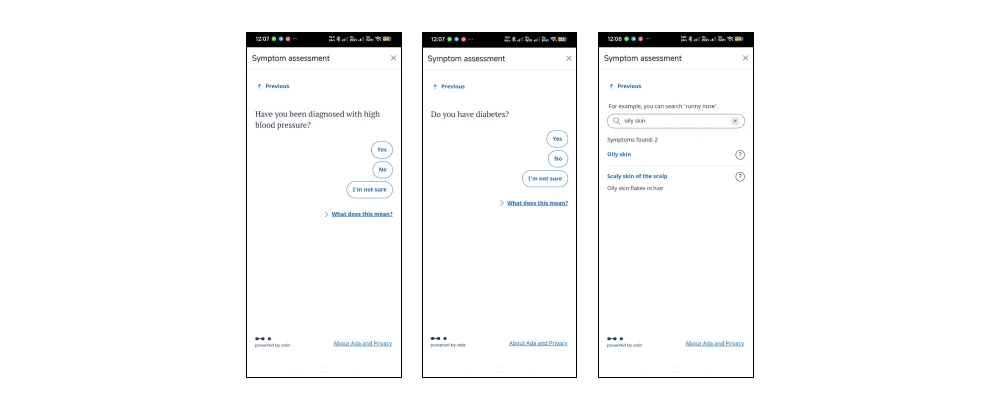
AI Health Tools Comparison Table
| Tool | Primary Use | HIPAA / GDPR | Clinical Evidence | Wearable Integration | Starting Price |
|---|---|---|---|---|---|
| Ada Health | Symptom assessment | ✓ GDPR | ✓ Published | ✗ | Free |
| Woebot | Mental health (CBT) | ✓ HIPAA | ✓ RCTs published | ✗ | Free |
| Noom Coach | Nutrition / weight | ✓ HIPAA + GDPR | ✓ Johns Hopkins | ~ Apple Health | $70/month |
| Wysa | Mental wellness | ✓ GDPR | ✓ NHS-validated | ✗ | Free / £9.99/mo |
| Oura + AI | Sleep / recovery | ✓ GDPR | ~ Sports studies | ✓ Native | $5.99/mo + ring |
| Teladoc / Livongo | Chronic conditions | ✓ HIPAA | ✓ Multiple RCTs | ✓ CGM, BP monitor | Employer / insurer |
✓ = Yes · ✗ = No · ~ = Partial. Pricing as of June 2026. Verify current pricing on vendor websites before purchase.

AI Health Tools: Pros and Cons
✅ Pros
⚠️ Cons
Pricing: What to Expect from AI Health Tools in 2026
- Free tier: Ada Health, Woebot, and Wysa (basic) are fully free for individual users. These tools offer substantial value at no cost, particularly for symptom assessment and mental wellness support.
- Freemium ($5–$15/month / €5–€14/month): Oura's AI insights subscription ($5.99/month), Wysa Premium (£9.99/month, approximately €11.50 / $11), and similar tools in this range offer deeper personalization and advanced features.
- Subscription coaching ($50–$150/month): Noom Coach starts at around $70/month ($209/year for the annual plan). This tier typically includes more active AI coaching, behavioral programs, and dietitian or therapist access.
- Enterprise / Employer plan (custom pricing): Tools like Teladoc Health/Livongo, Babylon Health for Enterprise, and Wysa for Business are priced per-employee or as employer/insurer bundles. These are commonly offered as US employer benefits or through European occupational health programs.
- Hardware + software (one-time + subscription): The Oura Ring 4 costs from $349 (approximately £280 / €330), with a monthly subscription on top. Similar models apply to other health wearable ecosystems.
Alternatives to AI-First Health Tools
Not every health situation calls for a dedicated AI health app. Here are some established alternatives worth considering alongside AI tools.
Telehealth Platforms
Services like Teladoc (US), Push Doctor (UK), and Doctolib (France) connect you with real doctors via video consultation — combining human clinical judgment with digital convenience.
NHS App / MyChart
Official health system apps — the NHS App (UK) and MyChart (US Epic integration) — provide access to records, test results, and appointment booking without AI augmentation but with direct clinical connection.
Traditional Wearables
Fitbit, Garmin, and Apple Watch without AI overlays provide basic biometric tracking. Useful as a starting point before adding AI interpretation layers.
Digital CBT Programs
NICE-approved digital mental health programs in the UK (like SilverCloud and iCBT platforms) offer structured, evidence-based therapy without conversational AI — a well-validated alternative to chatbot-based support.
Expert Insights on AI Tools for Health
Future Trends: Where AI Health Tools Are Heading
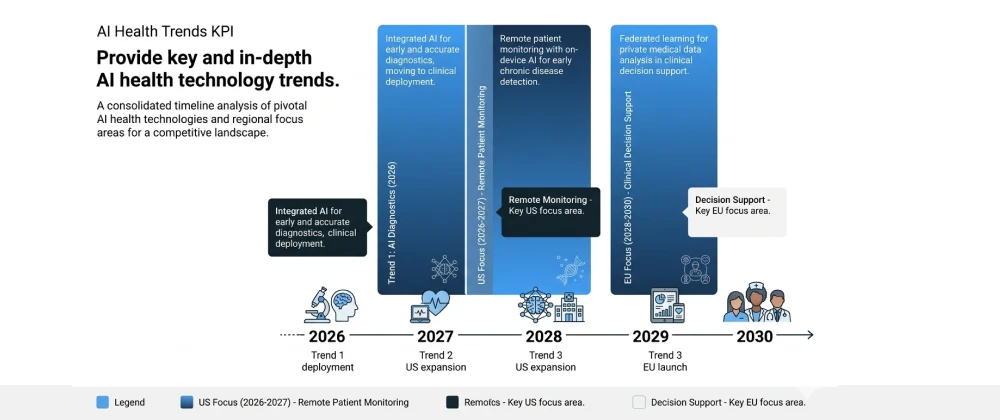
2026: Integration with Health Systems
AI health tools move from standalone apps to integrated components of national health systems. NHS England, Sécurité Sociale (France), and US employer insurance networks are actively embedding AI triage and monitoring into standard care pathways.
2027: Multimodal Health AI
AI health assistants will combine voice, image, and biometric data simultaneously — allowing a user to describe symptoms verbally while the AI simultaneously analyzes their skin via camera and heart rate via wearable, generating a richer and more accurate assessment.
2028: Predictive Preventive Health at Scale
Gartner predicts that by 2028, AI tools will be able to identify individuals at high risk of cardiovascular events, Type 2 diabetes, and certain cancers 18–24 months before clinical presentation — enabling preventive interventions that dramatically alter health trajectories.
Near Future: AI Health Companions with Long-Term Memory
The next generation of AI health tools will maintain continuous, longitudinal memory of your health journey — understanding years of context, not just the current session — functioning as true health companions rather than episode-based symptom checkers.
Frequently Asked Questions About AI Tools for Health
Final Verdict
AI Health Tools Are Among the Most Meaningful Practical Applications of AI Available Today
Unlike many AI use cases that primarily serve productivity or entertainment, AI health tools have the potential to improve lives in deeply substantive ways — catching the condition that was missed, providing mental health support at 2 AM when no human is available, and helping someone understand that their symptom pattern is something worth investigating. The technology is here. The evidence base is growing. And for most users across the US and EU, the best AI health tool is the one you actually use consistently.
SmartAIHuman.com Rating: AI Tools for Health (2026)
| Clinical Accuracy | |
| Ease of Use | |
| Data Privacy & Compliance | |
| Value for Money | |
| Evidence Base | |
| EU Regulatory Readiness |
Conclusion: The Most Personal Use of AI Is Also the Most Important
There is something different about AI applied to health. When AI helps you write a faster email or organize a spreadsheet, the stakes are low. When it helps you notice that your resting heart rate has been elevated for six days, or gives you a framework for managing a panic attack at midnight, or flags that a combination of your symptoms warrants a GP visit rather than a home remedy — the impact is of an entirely different order.
The AI health tools available in 2026 aren't perfect. They have real limitations. They are complements to — not replacements for — the clinicians, therapists, and human relationships that anchor our health. But for millions of people across the United States and Europe who face barriers to timely, affordable, and accessible healthcare, they represent a genuine and significant step forward.
At SmartAIHuman.com, we'll continue tracking the evidence, the regulations, and the real-world impact as this space evolves rapidly through 2026 and beyond.
For now, here is the question worth sitting with: If an AI health tool could monitor one aspect of your health more consistently and intelligently than you currently do yourself — what would you want it to watch, and what might you finally stop putting off?
Explore More on SmartAIHuman.com
Sources & Further Reading

SmartAIHuman Editorial Team shares practical AI guides, tool reviews, productivity strategies, and beginner-friendly tech tutorials to help readers use AI effectively in everyday life.
