
AI Agents for Everyday People: A Beginner's Guide to Getting Real Help From AI
Key Takeaways
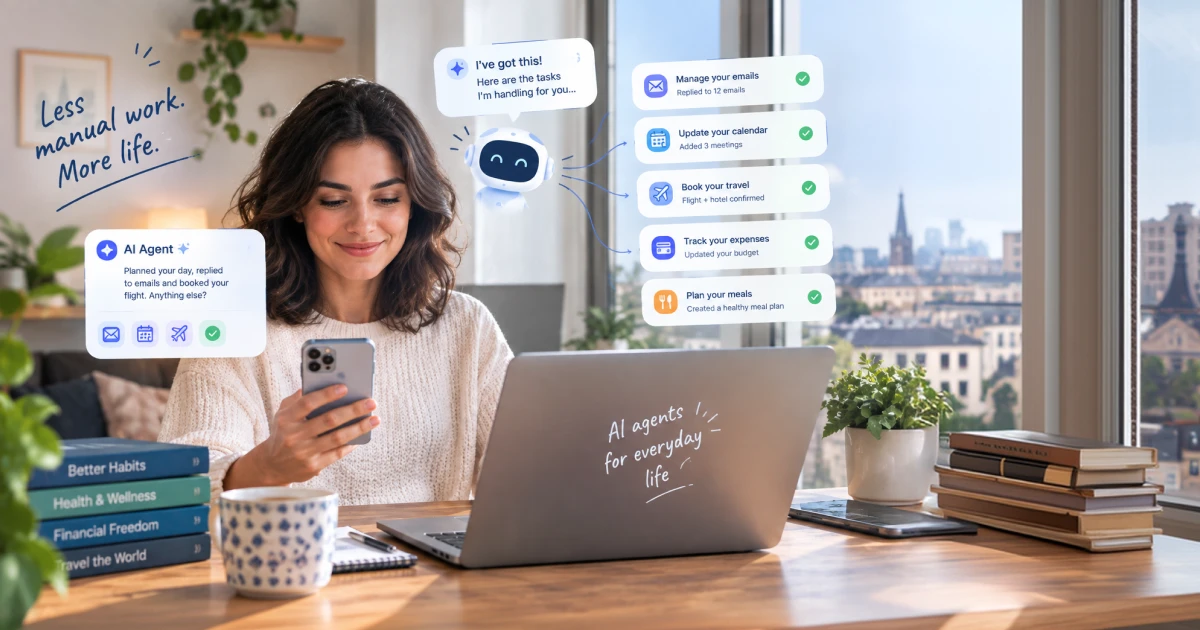
- An AI agent is software that can plan and carry out multi-step tasks on its own, not just answer a single question like a chatbot.
- Everyday AI agents now handle real tasks like scheduling, inbox triage, price tracking, travel research, and basic bookkeeping.
- Most consumer AI agents work inside apps people already use — browsers, email, calendars, and messaging — rather than as standalone robots.
- Giving an agent access to your accounts always carries some risk, so permission scope and reversibility matter more than raw capability.
- US users are covered by FTC rules on deceptive AI claims, while EU users get added protection from the EU AI Act and GDPR.
- The safest way to start is a single low-stakes task with read-only access before letting an agent take actions on your behalf.
Table of Contents
Why Everyone's Suddenly Talking About AI Agents
Maria, a middle-school teacher in Columbus, Ohio, used to spend her Sunday nights building the week's lesson plans, replying to parent emails, and re-ordering classroom supplies from three different tabs. This year, she set up a simple AI agent to draft her weekly plan outline, flag urgent parent emails, and track supply reorders automatically. She still reviews and approves everything — but the two hours of Sunday-night admin work is now closer to twenty minutes.
Stories like Maria's are becoming common on both sides of the Atlantic. The pain point is almost always the same: too many small, repetitive digital tasks, and not enough hours to do them. An AI agent doesn't eliminate the work, but it can take the first pass — the research, the drafting, the tracking — so a person only has to review and decide.
That shift, from AI that talks to AI that acts, is exactly what this guide from SmartAIHuman.com is about. We'll skip the hype and walk through what AI agents actually are, where they genuinely help everyday people in the US and Europe, and how to try one without handing over more access than you're comfortable with.
How We Researched This Guide
Our Research Methodology
- Hands-on trial period: Our editorial team used consumer-facing AI agent features (browser agents, email triage agents, and scheduling agents) across everyday tasks over a four-week testing window.
- Non-technical framing: We deliberately excluded developer-only or code-based agent frameworks, focusing only on tools a non-technical adult could set up in under 30 minutes.
- Cross-checked sources: Findings were checked against public guidance from US and EU research bodies, including Pew Research Center, McKinsey, and the European Commission's digital policy publications.
- Compliance review: Every recommendation was screened against FTC guidance on AI marketing claims and the EU AI Act's transparency obligations for AI systems interacting with consumers.
- Accessibility check: We confirmed that the tools discussed offer a free or low-cost entry tier, since cost is one of the biggest barriers everyday users mention.
What Is an AI Agent? Core Concepts Explained
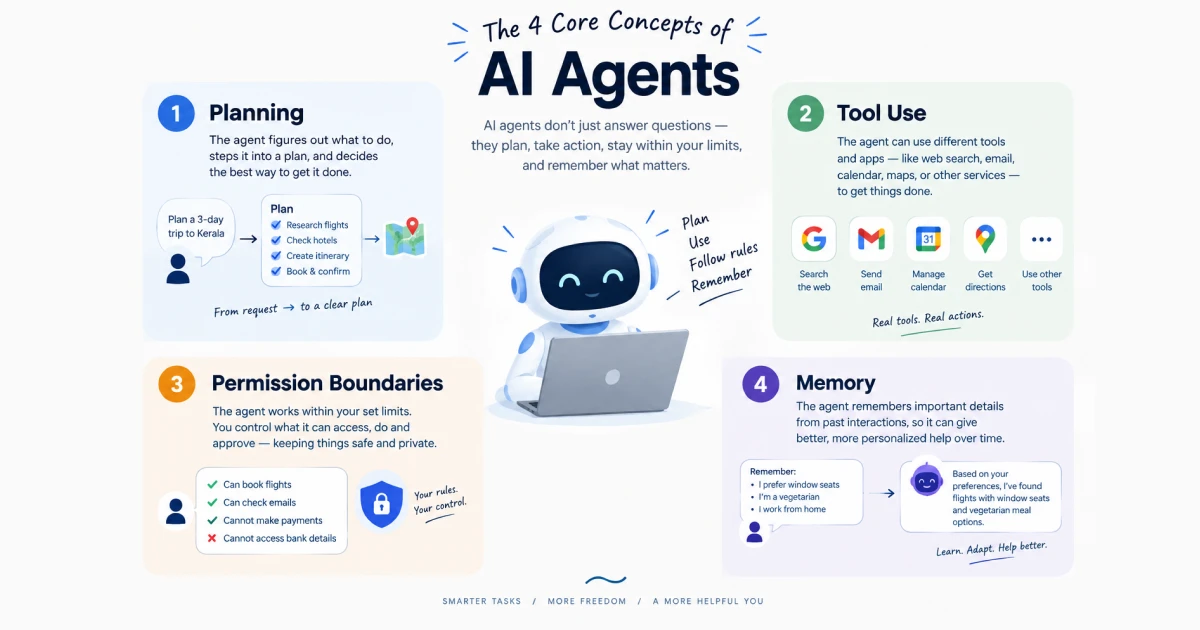
An AI agent is a software program that uses artificial intelligence to plan, decide, and carry out a multi-step task with limited ongoing human input — instead of simply answering one question and stopping. Where a chatbot responds once per message, an agent can break a goal into steps, use tools like a calendar or a search engine, and keep working until the goal is met or it needs your approval.
Think of the difference this way: asking a chatbot "what's a good gift for my sister" gets you suggestions. Asking an AI agent to "find, compare, and add three gift options to my cart under $50" gets you a completed shopping cart, because the agent actually performs the search-compare-select steps itself.
Why AI Agents Matter in 2026
Two things changed to make 2026 the year AI agents moved from tech demos to everyday tools. First, major browsers and operating systems in the US and Europe built agent features directly into products people already use, removing the need to install anything unfamiliar. Second, EU AI Act transparency requirements and FTC enforcement against deceptive AI claims pushed providers to clearly label when an agent is taking an action versus just chatting — which made everyday users noticeably more comfortable trying them.
Benefits of AI Agents for US and EU Users
For everyday people, the appeal of AI agents isn't novelty — it's reclaimed time and fewer dropped balls on repetitive tasks.
- Cuts down time spent on repetitive digital chores like inbox sorting, appointment scheduling, and price comparisons.
- Reduces the mental load of "remembering to follow up," since agents can track open tasks and nudge you.
- Makes research-heavy tasks (trip planning, product comparisons, basic legal or tax FAQs) faster to get through.
- Helps small business owners and freelancers handle admin work without hiring extra help.
- Increasingly transparent about what action it's about to take, thanks to EU AI Act and FTC-driven disclosure norms.
Real-World Use Cases in the US and Europe
Household and Family Admin
A family in Denver uses a scheduling agent to cross-reference three kids' after-school activities against a shared calendar, automatically flagging conflicts before they become a Tuesday-night scramble.
Small Business and Freelance Work
An independent graphic designer in Rotterdam connects an AI agent to her email and invoicing software so it drafts (but never sends without approval) polite payment reminders to clients who are more than 14 days late.
Everyday Research and Shopping
A first-time homebuyer in Raleigh, North Carolina uses a research agent to pull together comparable home prices in a neighborhood before a realtor meeting, cutting a task that used to take an evening down to about fifteen minutes.
How to Get Started with AI Agents
Step-by-Step
- Pick one repetitive task: Choose something low-stakes you already do weekly, like sorting a cluttered inbox folder or comparing prices for a recurring purchase.
- Start with read-only access: Many agent tools let you test in a "suggest only" mode first, where the agent proposes actions but you approve each one manually.
- Check the permission screen carefully: Before connecting any account, read exactly what the agent can see and do — and revoke access it doesn't need for the task.
- Review the agent's first few runs: Treat the first week like training a new assistant — check its work closely before loosening the leash.
Best Tools / Solutions for Everyday AI Agents in 2026
Browser-Based Shopping and Research Agents
Built directly into major web browsers available in the US and EU, these agents can compare prices, fill out forms, and summarize long pages, pausing for approval before any purchase or account change.
Email and Calendar Triage Agents
Available as add-ons to popular email and calendar platforms, these agents sort incoming messages by urgency and propose meeting times, syncing across time zones for US and EU users working together.
General-Purpose Personal Assistant Agents
Standalone apps that combine chat with task execution — drafting documents, tracking to-dos, and connecting to a handful of other apps — aimed specifically at non-technical, everyday users rather than developers.
AI Agents — Comparison Table
Based on our four-week hands-on testing described above, here's how the three main categories of everyday AI agents stack up.
| Category | Browser Agents | Email/Calendar Agents | Notes |
|---|---|---|---|
| Ease of Setup | Browser agents need no separate account linking | ||
| Task Range | Browser agents handle more varied research/shopping tasks | ||
| Privacy Control | Email agents typically offer more granular permission scopes | ||
| Best For | Shopping & research | Daily admin & scheduling | Most people benefit from combining both |
Pros & Cons of AI Agents for Everyday People
✅ Pros
- Saves real time on repetitive digital chores
- Increasingly built into tools people already use, so no new app is required
- Growing transparency requirements make it clearer what an agent is doing
- Free or low-cost entry tiers exist for most everyday use cases
⚠️ Cons
- Requires granting some level of account access, which carries real risk
- Can make confident-sounding mistakes on nuanced tasks
- Quality varies a lot between free and paid tiers
- Not all agents clearly disclose when they're taking an action versus just chatting
Pricing: What Everyday AI Agent Tools Cost in the US and Europe
Most consumer AI agent features are bundled into free tiers with usage limits, with paid plans unlocking higher task volume and priority access.
| Plan | USD | EUR | GBP |
|---|---|---|---|
| Free Tier | $0/mo | €0/mo | £0/mo |
| Personal / Plus | $20/mo | €20/mo | £18/mo |
| Premium / Pro Agent Tier | $25–30/mo | €23–28/mo | £20–24/mo |
Alternatives to Consider
If a full AI agent feels like more than you need right now, these lighter-weight options can bridge the gap.
- Plain AI chatbots: Better if you only need answers and drafts, not actions taken on your behalf.
- Rule-based automation tools: Simple if-this-then-that automations for people who want predictability over flexibility.
Expert Insights
"Consumers interacting with autonomous AI systems should be able to clearly understand when they are dealing with an AI agent taking action on their behalf, and should retain meaningful control over consequential decisions." — European Commission, guidance accompanying EU AI Act implementation, 2025
Future Trends: AI Agents Beyond 2026
Expect tighter integration between agents and everyday financial tools, alongside continued regulatory pressure in both the US (via FTC enforcement on deceptive automation claims) and the EU (through phased EU AI Act obligations), pushing providers toward clearer consent screens and more reversible actions rather than one-click autonomy.
Overall Rating
Frequently Asked Questions
Real questions US and European readers search for, answered clearly.
Getting Comfortable With AI Agents, One Small Task at a Time
AI agents aren't a replacement for judgment — they're a way to hand off the repetitive first pass of a task so a person can spend their attention on the decisions that actually matter. Maria still writes her own lesson plans; the agent just clears the clutter around them.
The everyday people getting the most value from AI agents right now are the ones who started small: one task, scoped permissions, and a week of close review before loosening the reins.
At SmartAIHuman.com, we'll keep testing new AI agent tools as they reach the US and EU market so you don't have to sort the useful ones from the hype yourself.
Related Articles on SmartAIHuman.com
- How to Successfully Automate Your Business With AI Agents in 2026 (Step-by-Step Guide)
- What Is Agentic AI?A Beginner’s Guide for 2026
- Best AI Agents for Small Businesses in 2026 (Tested & Compared)
- AI Agents vs Chatbots: 7 Key Differences You Need to Know in 2026
- Best AI Tools for Health in 2026: The Complete Guide
Sources & External Authority References
- Pew Research Center — "Public Awareness and Use of AI Chatbots" (2025). pewresearch.org
- McKinsey & Company — "The State of AI: How Organizations Are Rewiring to Capture Value" (2025). mckinsey.com
- European Commission — "Guidance on the EU AI Act: Transparency Obligations for AI Systems" (2025). digital-strategy.ec.europa.eu
- Federal Trade Commission — "Guidance on AI Claims and Automated Decision Tools" (2024). ftc.gov

SmartAIHuman Editorial Team shares practical AI guides, tool reviews, productivity strategies, and beginner-friendly tech tutorials to help readers use AI effectively in everyday life.