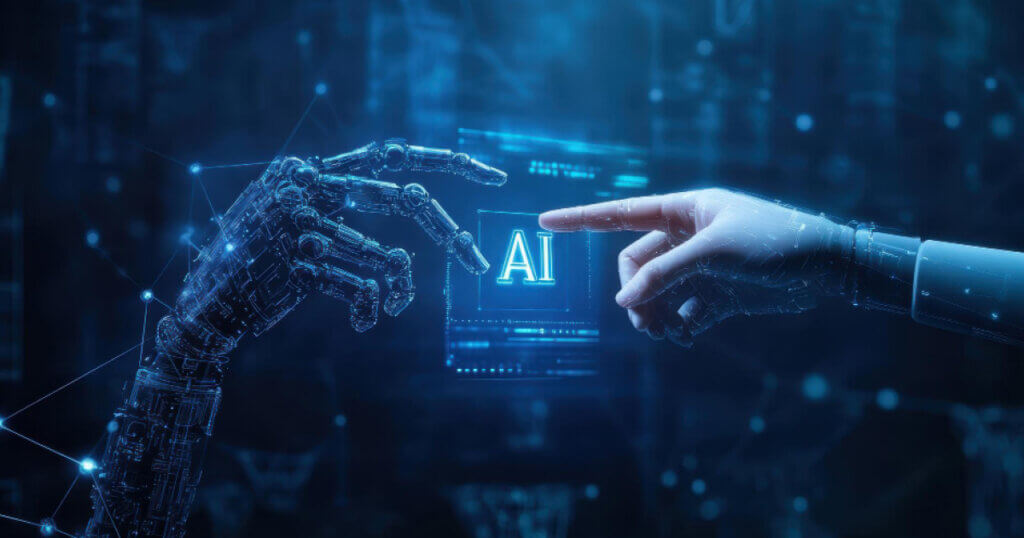
What Is Physical AI? The Next Big AI Shift After Chatbots — Explained Simply

Key Takeaways
- Physical AI is artificial intelligence built to perceive, reason about, and act in the physical world — the same underlying technology as chatbots, but wired into a body instead of a text box.
- Analyst estimates point to 50,000–100,000 humanoid robots shipping globally in 2026, with per-unit costs falling toward $15,000–$20,000 as production scales.
- NVIDIA, Google DeepMind, and startups like Physical Intelligence are now releasing "foundation models" for robots — general-purpose AI brains, similar in spirit to GPT or Gemini, but trained to control motion instead of generate text.
- China's humanoid robot output alone is projected to surge 94% in 2026, led by manufacturers like Unitree and AgiBot.
- The EU's "Digital Omnibus on AI," in force since July 27, 2026, reshuffled how physical AI systems are regulated — most embedded high-risk obligations now land in August 2028 rather than 2026.
- Warehouses and factories are the current proving ground; homes are next, but hardware limitations mean fully general household robots are still a few years out.
Table of Contents
The AI That's Learning to Open Your Fridge
A logistics manager at a mid-sized fulfillment center outside Columbus, Ohio, spent most of 2025 rolling out AI chatbots for customer service. By mid-2026, her attention had shifted entirely — to a pilot program testing humanoid robots on the warehouse floor, robots that could see a dropped box, decide how to pick it up, and place it on the right conveyor without a single line of task-specific code written for that exact scenario. The AI wasn't answering questions anymore. It was doing physical work.
That shift — AI moving off the screen and into machines that act on the physical world — is what people mean when they say "physical AI," and in 2026 it's happening faster than most people outside robotics and logistics have noticed. Chatbots taught the public what a large language model could do with words. Physical AI is the same underlying idea, aimed at bodies instead of text boxes, and the products built on it are now shipping in real, if still limited, numbers.
This guide from SmartAIHuman.com breaks down what physical AI actually is, why 2026 is the year it moved from research demo to commercial pilot, and what's realistic to expect next — without the investor-deck hype.
How We Researched This Guide
Our Research Methodology
- Industry report review: We reviewed 2026 analyst and research coverage of humanoid robotics and physical AI from Deloitte Insights, Bank of America Institute, and Goldman Sachs.
- Foundation model tracking: We compared the technical approaches behind NVIDIA's GR00T, Google DeepMind's Gemini Robotics, and Physical Intelligence's π-series models.
- Market data cross-check: We cross-referenced shipment and adoption estimates against TrendForce's April 2026 China humanoid manufacturing data and KraneShares' 2026 sector analysis.
- Regulatory review: We checked current obligations against the EU's Digital Omnibus on AI (Regulation (EU) 2026/1744, in force since July 27, 2026) and its interaction with the EU Machinery Regulation.
- Deployment case review: We looked at disclosed real-world deployments, including Amazon's robotics fleet and Staples Canada's automated fulfillment center, to separate live use from pilot-stage claims.
What Is Physical AI? Core Concepts Explained
Physical AI, also called embodied AI, is artificial intelligence built to perceive its physical surroundings, reason about them, and act on the real world through a robot or machine — rather than only generating text or images on a screen. It uses the same broad family of technology behind chatbots — large models trained on huge amounts of data — but trained instead to turn a camera feed and a goal ("pick up the box") into precise motor commands.
The clearest way to picture the difference: a chatbot's "body" is a text window, and its output is a sentence. A physical AI system's body is a robotic arm, a mobile base, or a full humanoid frame, and its output is a sequence of movements that has to work in a world with gravity, clutter, and things that break.
Why Physical AI Matters in 2026
For years, robotics was stuck in a narrow-task rut — a robot arm could weld a car door with superhuman precision but couldn't pick up a dropped tool it hadn't been explicitly programmed to recognize. Physical AI breaks that pattern by giving robots general-purpose foundation models instead of single-purpose scripts, the same leap chatbots made when they moved from scripted rules to models that could handle open-ended conversation. In 2026, that leap is showing up in real hardware: NVIDIA's GR00T N1.5, Google DeepMind's on-device Gemini Robotics release, and Physical Intelligence's π0 model are all generalist "robot brains" now being licensed to humanoid manufacturers like Figure, Agility, Apptronik, and 1X. At the same time, China's humanoid output is projected to surge 94% in 2026, with Unitree and AgiBot alone expected to capture nearly 80% of that market — a sign this is now an industrial race, not a lab experiment.

Benefits of Physical AI for US and EU Businesses
For companies facing labor shortages and rising automation costs, physical AI offers a different kind of value than chatbots do — it addresses physical, not informational, bottlenecks.
- Handles unstructured environments — narrow aisles, irregular objects, brownfield facilities — that traditional single-purpose robots can't adapt to.
- Reduces the "automation gap" for manufacturers facing labor shortages without requiring a full facility redesign around fixed robotic arms.
- Improves over time through software updates to the underlying foundation model, rather than requiring new hardware for every new task.
- Creates a new category of return-generating physical infrastructure for logistics, warehousing, and eventually home service industries.
Real-World Use Cases in the US and Europe
Warehousing and Logistics
Amazon's robotics fleet, now numbering more than a million units, is expected to handle roughly 75% of the company's global deliveries by mid-2026 — still largely specialized robots rather than humanoids, but increasingly built on the same physical AI foundation models. Staples Canada replaced traditional conveyors with autonomous robots at its largest fulfillment center near Toronto, a facility that now manages nearly half the company's national e-commerce volume.
European Industrial Manufacturing
Germany's NEURA Robotics raised roughly €1.2 billion in a 2026 funding round backed by Bosch and Schaeffler, making it the highest-funded humanoid developer in Europe. Schaeffler itself is positioning as one of Europe's most aggressive early adopters of humanoid robots on its production lines.
Specialized vs. General-Purpose Robots
Not every warehouse task favors a humanoid. Boston Dynamics' Stretch robot, a non-humanoid design purpose-built for unloading shipping containers, already outperforms humans at that specific job and is deployed in GAP warehouses — a reminder that physical AI's near-term wins are often narrower and more specialized than the humanoid headlines suggest.
How Businesses Are Getting Started with Physical AI
Step-by-Step
- Identify a narrow, high-repetition task first: Most successful pilots start with a single well-defined job, like bin-picking or container unloading, rather than a general-purpose robot deployment.
- Evaluate specialized robots before humanoids: Purpose-built robots often outperform humanoid designs on today's hardware for specific warehouse tasks.
- Budget for the full stack, not just the robot: Simulation training, safety certification, and integration work typically cost more than the hardware itself.
- Map your EU compliance path early: If deploying in the EU, determine whether your system falls under the AI Act's Annex III (stand-alone high-risk) or Annex I (embedded in machinery) track, since the deadlines and requirements differ.
- Pilot with a vendor offering software updates: Foundation-model-based robots improve through updates rather than hardware replacement — confirm your vendor supports this before committing to hardware.
Leading Physical AI Platforms in 2026
NVIDIA GR00T
NVIDIA's GR00T N1 and N1.5 models are among the most widely licensed humanoid foundation models, pairing a vision-language reasoning backbone with a fast, reactive motor-control layer, and are already integrated by humanoid makers including Figure, Agility, Apptronik, and 1X.
Google DeepMind Gemini Robotics
Built on the Gemini 2.0 architecture, Gemini Robotics adds 3D spatial perception and the ability to generate robot control code on the fly. Its On-Device release made the model lightweight enough to run locally on a robot rather than depending on a cloud connection.
Physical Intelligence (π-series)
Physical Intelligence has become one of the most closely watched startups in the space, producing generalist robot models that its team describes as able to work out unfamiliar tasks rather than relying purely on tasks they were explicitly trained on.
Specialized Robots vs. General-Purpose Humanoids — Comparison Table
Based on the methodology above, here's how today's two dominant physical AI approaches compare in practice.
| Category | Specialized Robots | General-Purpose Humanoids | Notes |
|---|---|---|---|
| Task Efficiency Today | Purpose-built designs like Stretch still outperform humanoids on narrow jobs | ||
| Adaptability | Humanoids handle varied, human-built environments more flexibly | ||
| Deployment Cost Today | Humanoid unit economics are improving but still higher per unit | ||
| Best For | Single, high-repetition tasks in existing facilities | Varied, unstructured environments and brownfield sites | Most 2026 deployments still favor specialized robots |
Pros & Cons of Adopting Physical AI
✅ Pros
- Generalizes across tasks without custom programming for each one
- Improves through software updates rather than hardware replacement
- Addresses real labor shortages in warehousing and manufacturing
- Backed by major foundation model providers, meaning rapid capability improvements
⚠️ Cons
- Hardware costs remain high relative to specialized alternatives
- Humanoid designs still show real limitations against purpose-built robots in production settings
- EU regulatory classification for humanoid robots is still being finalized
- Raises workforce displacement concerns that are already shaping labor and privacy negotiations
Alternatives to Consider
Physical AI isn't an all-or-nothing decision — many organizations are better served by adjacent approaches, at least for now.
- Traditional fixed-task robotics: Still the more cost-effective and reliable choice for high-volume, unchanging tasks like welding or palletizing.
- Wheeled or non-humanoid mobile robots: Companies like KUKA deliberately favor wheeled platforms over humanoid legs for safety and reliability on European production lines.
Expert Insights
Deloitte's 2026 technology outlook frames physical AI's readiness for mainstream deployment as the result of several technologies converging at once — improvements in how robots perceive their environment, process information, and execute actions in real time, moving AI-enabled machines from niche pilots toward broader adoption. — Deloitte Insights, "Physical AI and Humanoid Robots," 2026 Tech Trends
Future Trends: Physical AI Beyond 2026
Expect the next two years to be defined as much by regulation as by hardware. The EU's Digital Omnibus on AI reset the compliance timeline for humanoid robots, pushing most high-risk obligations for AI embedded in machinery to August 2028, while transparency requirements and the parallel Machinery Regulation phase in earlier, from January 2027. In the US, expect continued investment-driven growth without an equivalent federal framework in the near term, keeping the regulatory gap between the two regions wide. On the hardware side, watch for household humanoid pilots to expand beyond current warehouse and factory settings as unit costs keep falling — though most credible forecasts still treat general-purpose home robots as a late-2020s story rather than an imminent one.
Overall Rating
Frequently Asked Questions
Real questions US and European readers search for, answered clearly.
The Body Is Catching Up to the Brain
Chatbots proved that AI could understand and generate language at a level that felt genuinely useful, almost overnight. Physical AI is running the same playbook one layer down — giving that same kind of general intelligence a body, starting with warehouses and factories rather than living rooms. The gap between the demo footage and reliable everyday performance is still real, but it's narrowing faster than most non-specialists have registered.
What's clear from the 2026 data is that this isn't a hype cycle waiting to pop — it's a hardware and regulatory maturation process playing out in real time, with serious capital, real shipment numbers, and actual EU compliance deadlines attached to it.
We put this guide together at SmartAIHuman.com because physical AI is going to be one of those topics everyone suddenly has an opinion about the moment it shows up in a viral video — and we'd rather you understood the fundamentals before that happens.
Related Articles on SmartAIHuman.com
- What Are World Models? The AI Concept Behind Physical AI
- Types of AI Agents Explained: From Chatbots to Autonomous Systems
- AI Security & Privacy: The Complete Guide for US and EU Organizations in 2026
- AI Memory: Why Every Assistant Needs Long-Term Memory to Actually Help You
- On-Device AI vs. Cloud AI: What's the Difference?
Sources & External Authority References
- Deloitte Insights — "Physical AI and Humanoid Robots," 2026 Tech Trends. deloitte.com
- Bank of America Institute — "Transformation: Physical AI, Part 2 — Humanoid Robots" (March 2026). institute.bankofamerica.com
- TrendForce — "China's Humanoid Robot Output to Surge 94% in 2026" (April 2026). trendforce.com
- NVIDIA — "GR00T N1: An Open Foundation Model for Generalist Humanoid Robots" (arXiv, March 2025). arxiv.org
- Taylor Wessing — "Robotics and Physical AI: Securing EU Market Access After the Digital Omnibus on AI" (August 2026). taylorwessing.com
SmartAIHuman Editorial Team shares practical AI guides, tool reviews, productivity strategies, and beginner-friendly tech tutorials to help readers use AI effectively in everyday life.